
Ceramic
Our top film for heat. No dye, so it won't fade purple.
- Up to 88% infrared rejection (manufacturer rating)
- Over 99% UV blocked (manufacturer rating)
- Non-metal: no phone or GPS interference
Now open · Financing (subject to approval) · Military, law enforcement & healthcare discounts
Isaiah 41:10
Straight answers on heat, price and shade from our tint shop in Mission.
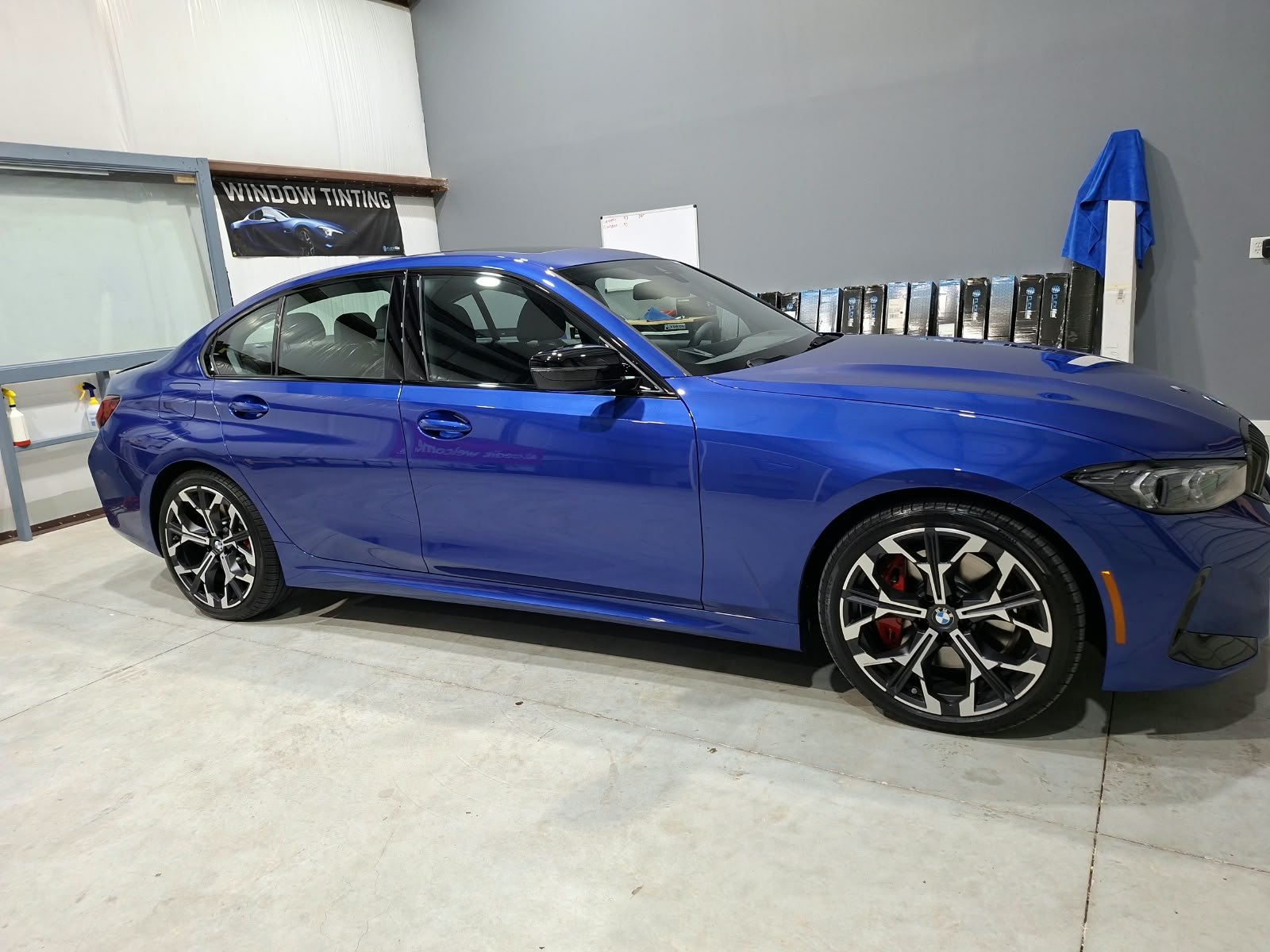
If heat is the main reason you're tinting, choose ceramic. If you want a deep, even look and a lower price, carbon is a good middle option.
We install both at our shop in Mission: Flexfilm Panaflex, a carbon ceramic film, and Flexfilm Terraflex carbon.
Here's where our two films differ.
Our top film for heat. No dye, so it won't fade purple.
A deep, even shade and a step up from basic film.
Both films darken your windows and cut glare. The big difference is heat.
Ceramic tint is made to block infrared light, the part of sunlight you feel as heat. Panaflex is rated to block up to 88% of infrared heat and over 99% of UV (manufacturer ratings). Carbon tint gives a deep, even shade and costs less.
Ceramic. Carbon helps too, but ceramic is the film made to block infrared, and it's our top film for heat.
Feel it for yourself. Our lobby has a heat lamp test box: one side has no film, one has basic tint and one has carbon ceramic.
No. Most of the heat you feel through a car window is infrared light. You can't see it, so blocking it doesn't take a dark film.
Basic dyed tint mostly cuts brightness. It makes a car look darker, but a lot of the heat still comes through. Ceramic is made to block infrared, so a lighter ceramic shade can keep a car cooler than a darker basic film.
So pick your shade for looks, and pick your film for heat.
Ceramic costs more than carbon. Your price depends on your vehicle and which windows you want done.
Quotes are free, financing is available (subject to approval), and we offer military, law enforcement and healthcare discounts.
If heat is the reason you're tinting, ceramic. It blocks heat at any shade, so you can keep the front side windows legal and still keep the cabin cooler. How ceramic tint works
Purple fade comes from dye breaking down in the sun. That's what happens to basic dyed tint. Panaflex has no dye, so it won't fade purple.
Signal trouble comes from metal in the film, and we don't use metallic film. Panaflex has no metal in it, so phone, GPS and radio signals pass through normally.
The same rules apply to both films. Front side windows must be 25% or lighter. The side windows behind the driver can be any shade, and so can the rear window if you have a mirror on each side. The windshield can only be tinted along the top strip. Read the Texas tint law guide
Call or text (956) 360-5196 with your year, make and model for a free quote. Or stop by to see the shades and try the heat lamp test. Get a free quote
We're on West Griffin Parkway in Mission, a short drive from McAllen, Palmview, Pharr, Edinburg, Alamo and San Juan.
2103 W Griffin Parkway, Suite 2, Mission, TX 78572
Mon–Fri 9–5 · Sat by appointment · Sun Closed
Get directions or call or text (956) 360-5196.
For heat, ceramic. Flexfilm Panaflex is rated to block up to 88% of infrared heat (manufacturer rating). Carbon costs less and still gives a deep, even shade.
Yes, ceramic costs more than carbon. Your price depends on your vehicle and which windows you want done.
Not by itself. Most of the heat is infrared, which you can't see. A lighter ceramic shade can keep a car cooler than a darker basic film.
Yes. Stop by our shop in Mission to see the shades and try the heat lamp test box.
Free quotes, no pressure. Year, make and model is all we need to start.